
Is Your Kitchen Tile in Broward County Showing Grease Buildup?
Most homeowners think grease is just a surface problem. Wipe it down, move on. But grease doesn't just sit there — it embeds, darkens, and multiplies. Every time you cook, those airborne oil particles settle into tile pores and grout lines. And in Broward County's humidity? That buildup happens faster than you think.
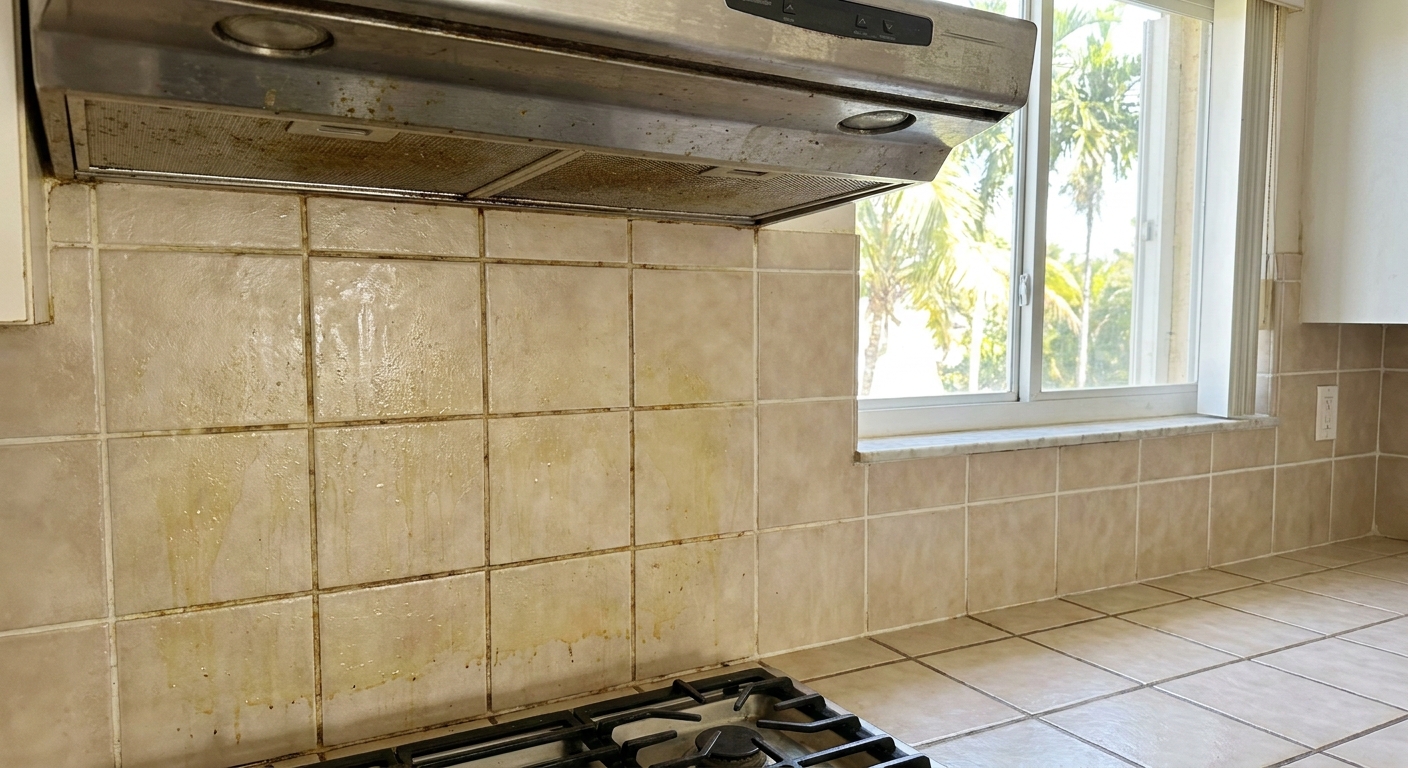
So here's the reality. If you're seeing a sticky film or noticing your tile has lost its shine, that's not age — that's grease. Every cooking session leaves a trace. Every missed cleaning cycle compounds it. And every passing month without intervention makes the fix harder — not just cosmetically, but structurally.
When Grease Stops Being a Film and Starts Being a Problem
Most of the time, grease buildup starts slow. You fry something once a week, wipe the counter, call it good. But those airborne droplets don't just vanish. They drift, settle, and bond to whatever surface they land on. Tile, backsplash, grout — it all collects residue you can't always see at first.
But when it does show up? Different story. That's when your tiles feel tacky underfoot, when your backsplash looks cloudy even after you've cleaned it, and when regular dish soap stops cutting through. We've seen it happen in real time with Broward kitchens. Homeowners assume it's just dirt — it's not. And when grease gets flagged as the real issue, the cleaning approach has to shift unless you want to scrub for hours with zero results.
The Damage Grease Actually Does
You can't ignore grease buildup and expect it to stay harmless — that's just pretending borrowed time is permanent. Grease traps bacteria, holds onto odors, and degrades the sealant protecting your grout. Over months, it creates discoloration you can't reverse with a mop.
Here's where that matters most:
- Grout lines absorb oil and turn yellow or brown, even when the tile itself looks clean
- Porcelain and ceramic finishes lose their gloss and develop a hazy layer that resists traditional cleaners
- Backsplash tiles near the stove collect the heaviest concentration and show staining first
- Humidity accelerates adhesion, making South Florida kitchens especially vulnerable to stubborn buildup
- Sealed surfaces eventually break down when grease sits too long, exposing porous material underneath
When Standard Cleaning Falls Short
Want to restore that tile? You'll need to prove the cleaner you're using can actually break down oil — not just push it around.
Grease removal has three main requirements. You need a degreasing agent strong enough to dissolve the bond. You need mechanical action to lift what's been embedded. And you need a rinsing method that doesn't leave residue behind. Miss one of those, and the shine doesn't come back. Even if you scrubbed until your arm hurt. And if any cleaning product you used wasn't formulated for grease? That effort's wasted too. No partial results from all-purpose sprays that claim they do everything.
What Actually Cuts Through Kitchen Grease
We've tested this in dozens of Broward kitchens. Some methods work. Most don't.
Here's what your cleaning arsenal should include:
- A pH-balanced degreaser designed for tile and stone — not just something labeled "all-purpose"
- Warm water mixed with a surfactant that lifts oil instead of smearing it
- A stiff-bristle brush or steam cleaner for grout lines where grease embeds deepest
- Microfiber cloths that trap residue instead of spreading it to adjacent tiles
If the grease has been sitting for months, you'll need more than elbow grease. Steam cleaning or professional extraction might be the only way to pull what's soaked into porous grout. So if that backsplash hasn't been deep-cleaned in over a year, you'd better plan for more than a quick wipe-down.
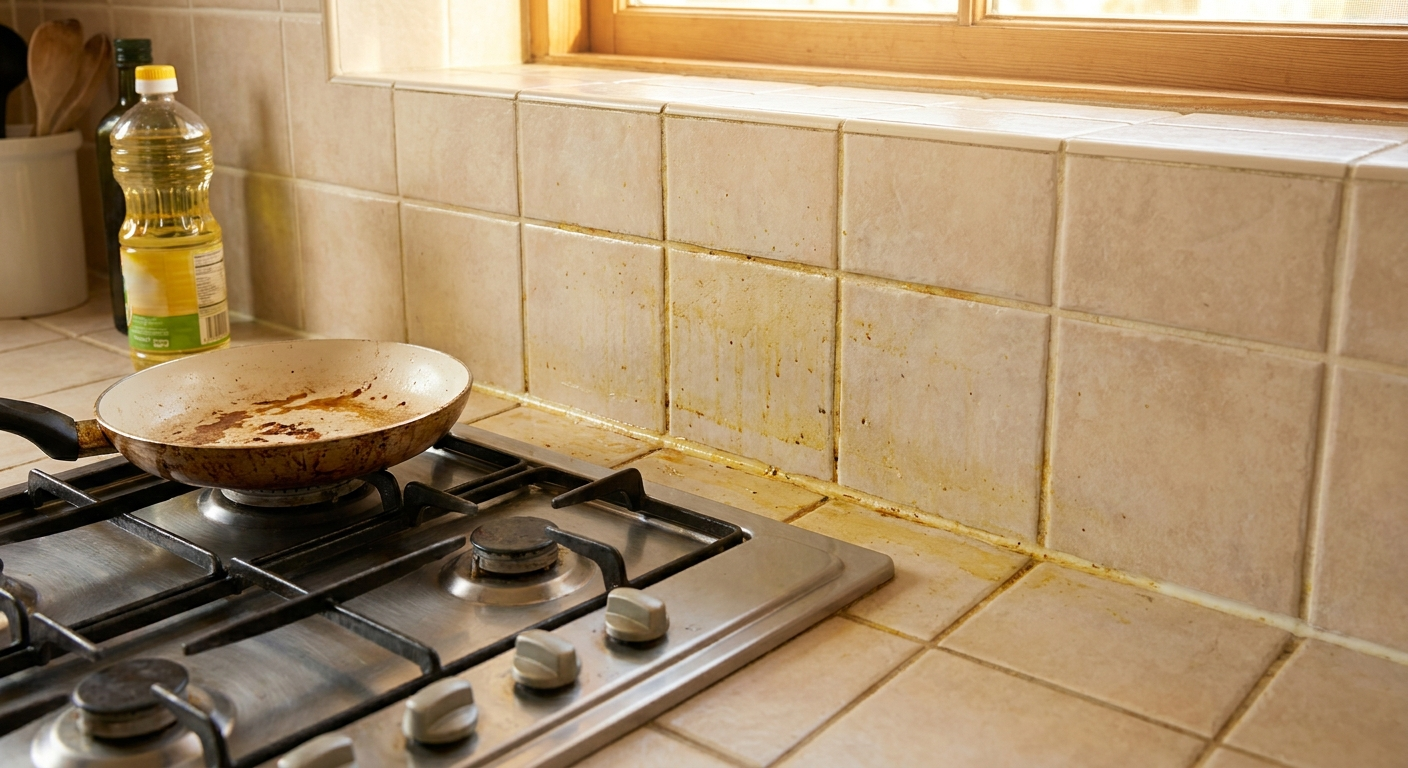
Where Most Homeowners Go Wrong
Using the Wrong Cleaner for the Job
Trying to remove grease with glass cleaner or bleach? That's not going to cut it. Sloppy product choices can waste time or even damage finishes. Most homeowners stay ahead by using degreasers formulated for kitchens — and plenty avoid setbacks by not assuming one cleaner does it all.
Waiting Until the Buildup Is Visible
Don't wait until your tile looks dull to start cleaning it properly. If you ignore early-stage grease, you're compounding the problem. If you let it sit for months, you risk permanent staining. Wipe down high-traffic cooking zones weekly. It's tedious. It works.
Skipping the Grout Entirely
If you cleaned the tile but ignored the grout, you're only halfway there. Grout is porous and absorbs grease faster than glazed tile. If it's discolored or feels rough, it's holding oil. That's what stiff brushes and steam are for. Understanding why grout gets dirty helps you prevent future buildup before it becomes permanent.
Stopping Grease Before It Settles
Taking preventive steps isn't rocket science. Keeping grease from building up in the first place — and protecting your tile long-term — that's where kitchens stay cleaner without constant intervention.
Daily habits make the difference:
- Run your exhaust fan every time you cook with oil or butter
- Wipe down backsplash tiles immediately after frying or sautéing
- Use splatter screens to contain oil droplets before they go airborne
- Seal grout lines annually to block absorption and simplify future cleaning
- Keep a degreasing spray within arm's reach and use it between deep cleans
When DIY Stops Being Enough
If your tile still looks filmy after scrubbing, or your grout won't lighten no matter what you try, you're in territory where homemade solutions get you nowhere.
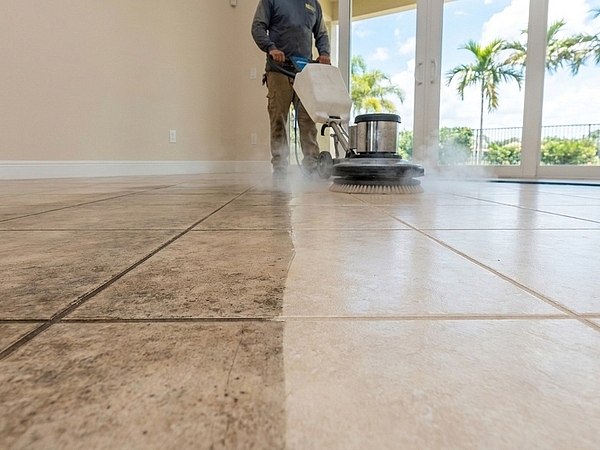
A professional tile cleaning service helps you restore what regular maintenance can't touch, apply commercial-grade degreasers safely, extract buildup from grout without damaging it, reseal surfaces so future grease wipes away easily, and save you hours of frustration with results that actually last. Professional tile and grout cleaning addresses deep-set contamination that household products simply can't penetrate. South Florida's humidity and environmental factors make regular professional maintenance even more critical for long-term tile protection.
It's not just about making your kitchen look better this month. It's about protecting an investment and keeping surfaces in shape so grease never gets the upper hand again. Residential surface restoration services provide comprehensive solutions that extend beyond basic cleaning to preserve your home's value. Getting a professional assessment can identify hidden damage and prevent costly repairs down the line.
Grease Doesn't Wait for Spring Cleaning
Cooking leaves a mark whether you see it immediately or not. Using your kitchen the right way — and defending your tile against inevitable buildup — that's where homeowners either stay ahead or spend weekends scrubbing with nothing to show for it. There's no shortcut when grease has set in. But there's also no excuse when prevention takes five minutes a day and the difference is a kitchen that actually looks clean instead of one that just smells like cleaner.
Let’s Bring Back Your Kitchen’s Shine
We know how frustrating it is to see your kitchen tile lose its luster to stubborn grease, no matter how hard you scrub. Let’s tackle the buildup together and restore your kitchen to its best. If you’re ready for a real transformation, give us a call at 561-376-7362 or get a free quote today—let’s make your kitchen sparkle again.
‹ Back
Recent Posts
-

-
Should You Schedule Tile Cleaning in Broward County Before the Holidays?
September 22, 2026
-
Is Your Natural Stone in Broward County Losing Its Shine?
September 8, 2026
-
-
Are Your Tile Floors in Broward County Harder to Keep Clean?
August 11, 2026