
Do High-Traffic Floors in Broward County Need More Frequent Cleaning?
Most facility managers think floor maintenance is just about appearance. Sweep, mop, done. But dirt does more than sit on the surface — and if you're not treating high-traffic zones like the battlegrounds they are, you're setting yourself up for costly repairs. Floors may look passable under fluorescent lights, but they carry a hidden load of grit, moisture, and bacteria. Especially when hundreds of people walk across them daily.
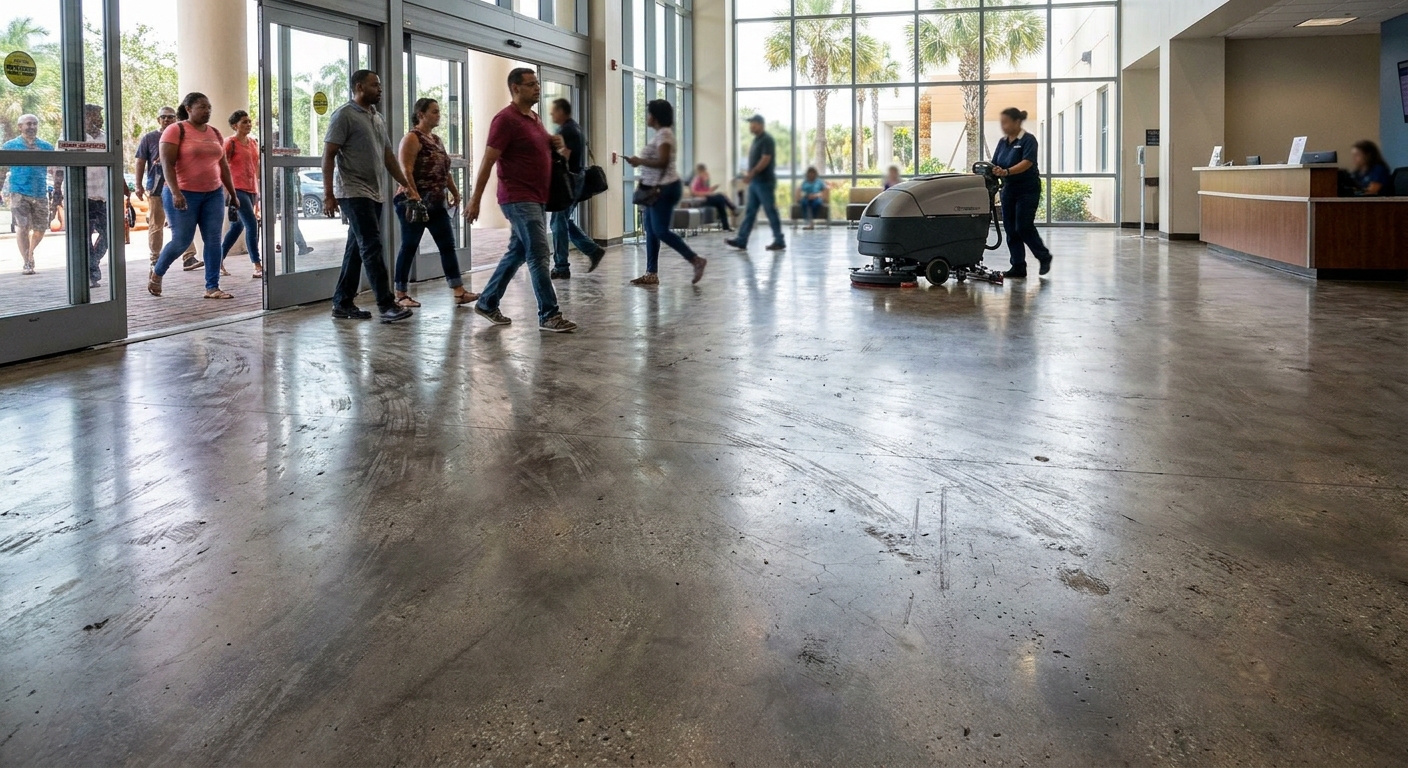
So here's what matters. If you're managing a space where foot traffic never stops, that flooring isn't just decorative. It's infrastructure. Every scuff mark tells a story. Every delay in cleaning accelerates wear. And every maintenance decision should be grounded in how the space is used — not just how it looked when it was installed.
Foot Traffic Leaves More Than Footprints
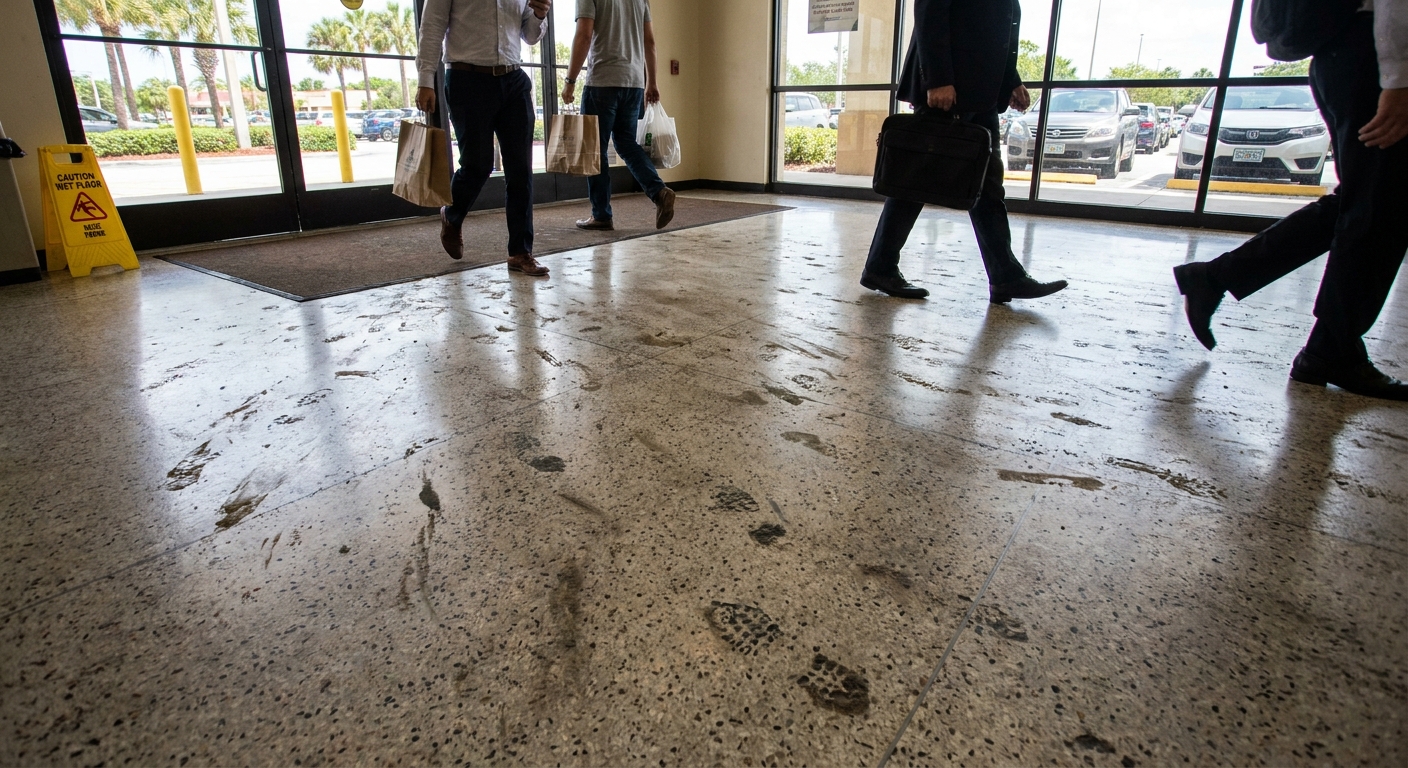
Walk through any Broward County retail center, school hallway, or hospital entrance during peak hours. You're not just seeing people — you're watching contaminants roll in by the thousands. Dirt from parking lots. Sand from beachgoers. Moisture from summer storms. It all gets dragged inside, and it doesn't stay on the surface for long.
That grit works its way into grout lines, carpet fibers, and vinyl seams. It scratches finishes. It dulls tile. And when it mixes with humidity, it becomes a breeding ground for mold and bacteria. The IRS doesn't audit your floors, but your customers, employees, and liability insurance sure do. Neglect becomes visible fast, and once it does, the damage is already done.
What Gets Tracked In Stays There
We operate in a subtropical climate. That means moisture is constant, and outdoor debris doesn't dry out before it gets inside. Every entryway becomes a collection point. Every rainy afternoon turns your lobby into a slip hazard waiting to happen.
Here's what walks through your doors daily:
- Sand and soil from parking lots and landscaping
- Rainwater that puddles near entrances and spreads across tile
- Oil and residue from vehicle traffic in garages or loading zones
- Pollen and organic debris during seasonal shifts
- Salt and chemicals from outdoor cleaning or storm runoff
Frequency Isn't Negotiable in Heavy Use Zones
If your floors see more than a few dozen people per hour, daily cleaning isn't overkill. It's baseline. And in some environments, it's not even enough. Hospitals, restaurants, schools, and retail spaces can't afford to wait until grime is visible. By then, the damage is underway.
Cleaning frequency should scale with usage. A corporate office might hold up with nightly service. A grocery store needs attention multiple times per shift. The material matters too — carpet hides dirt longer but traps it deeper, while tile shows every streak but cleans up faster if you stay on top of it.
The Real Cost Comes Later
Skipping cleanings doesn't just make floors look bad. It shortens their lifespan and racks up replacement costs you didn't budget for. Grit acts like sandpaper under foot traffic. Moisture seeps into seams and subfloors. Stains set in and become permanent. What could've been handled with a mop and a schedule turns into a capital expense.
Here's what breaks down when cleaning gets postponed:
- Protective sealants wear away faster without regular maintenance
- Grout becomes discolored and porous, absorbing stains and bacteria
- Vinyl and linoleum develop scuffs that can't be buffed out
- Hardwood finishes dull and require refinishing sooner than expected
- Carpets trap allergens and odors that deep cleaning can't fully reverse
Safety Issues Multiply in Humid Conditions
Broward County's weather doesn't do floors any favors. Humidity lingers. Spills spread. And wet floors stay wet longer than they would in drier climates. That's a liability problem, not just a cosmetic one.
Slip-and-fall incidents spike in high-traffic areas where moisture isn't managed. It's not enough to put down a caution sign and hope for the best. Frequent cleaning means fewer hazards, fewer insurance claims, and fewer reasons for someone to lawyer up after taking a tumble in your lobby.
Not All Cleaning Methods Hit the Mark
Running a mop over the floor at the end of the day might check a box, but it won't solve the problem. High-traffic zones need targeted methods that match the material and the level of use. A one-size-fits-all approach leaves dirt behind and wears out flooring faster.
Effective maintenance in heavy-use areas requires:
- Spot cleaning throughout the day, not just at closing time
- Equipment that extracts dirt instead of pushing it around
- pH-balanced solutions that clean without degrading sealants
- Scheduled deep cleans that go beyond surface-level sweeping
- Entry mat systems that capture debris before it spreads
Compliance Standards Keep Rising
Depending on your industry, cleanliness isn't optional. Healthcare facilities face strict sanitation protocols. Schools answer to health inspectors. Restaurants get graded on hygiene, and floors are part of the equation. Even corporate spaces are held to higher standards as tenants and customers expect more.
Frequent cleaning isn't just good practice — it's often required. And if you're audited or inspected, "we were planning to clean it tomorrow" won't hold up. Documentation matters. Schedules matter. Proof that you're staying ahead of contamination, not reacting to it, keeps you compliant and out of trouble.
When DIY Stops Working
Some businesses try to handle floor maintenance in-house. That works until it doesn't. Staff gets busy. Equipment breaks. Standards slip. And suddenly, what was supposed to save money starts costing more in repairs and reputation.
Bringing in a professional service gives you consistency, accountability, and expertise. They know which products work on which surfaces. They show up on schedule. And they catch problems before they turn into expensive fixes. It's not about giving up control — it's about getting results that actually last.
Your Floors Tell the Whole Story
People notice floors more than you think. Walk into a space with stained tile or matted carpet, and the impression is set before anyone says a word. It doesn't matter how good your service is or how polished your branding looks — dirty floors say you're cutting corners.
We've worked with facility managers across Broward County who didn't realize how much their floors were costing them until they committed to a real cleaning schedule. Once they did, the difference showed up fast. Fewer complaints. Fewer repairs. And a space that actually looked like it was worth maintaining.
Maintenance Beats Replacement Every Time
Flooring isn't cheap to install, and it's even more expensive to replace ahead of schedule. But that's exactly what happens when cleaning gets pushed to the back burner. High-traffic areas take a beating, and without consistent care, they fail faster than the warranty suggests.
Frequent cleaning isn't an expense — it's protection. Every session removes the grit that grinds down finishes. Every wipe-down prevents stains from setting. Every deep clean extends the clock before you're shopping for new flooring and dealing with the disruption that comes with it. Floors in Broward County work hard. Treat them like it, and they'll hold up. Ignore them, and they'll remind you why shortcuts don't pay off.
Let’s Protect Your Floors Together
We know how much effort goes into keeping your Broward County facility looking sharp and running safely. If you’re ready to see the difference a professional cleaning schedule can make, let’s talk about your unique needs. Call us at 561-376-7362 or get a free quote—we’re here to help you keep your floors in top shape, day in and day out.
‹ Back
Recent Posts
-
-
Should You Schedule Tile Cleaning in Broward County Before the Holidays?
September 22, 2026
-
Is Your Natural Stone in Broward County Losing Its Shine?
September 8, 2026
-
-
Are Your Tile Floors in Broward County Harder to Keep Clean?
August 11, 2026