Can a Home Inspection in Flagstaff Find Drainage and Grading Issues?
Most buyers think inspections are just about roofs and wiring. Check the boxes, sign the papers, move in. But water doesn't care about your timeline — and if your inspector misses how it moves around your property, you're setting yourself up for expensive surprises. Drainage and grading might not look dramatic during a walkthrough, but they dictate whether your foundation stays solid or starts cracking three years in.
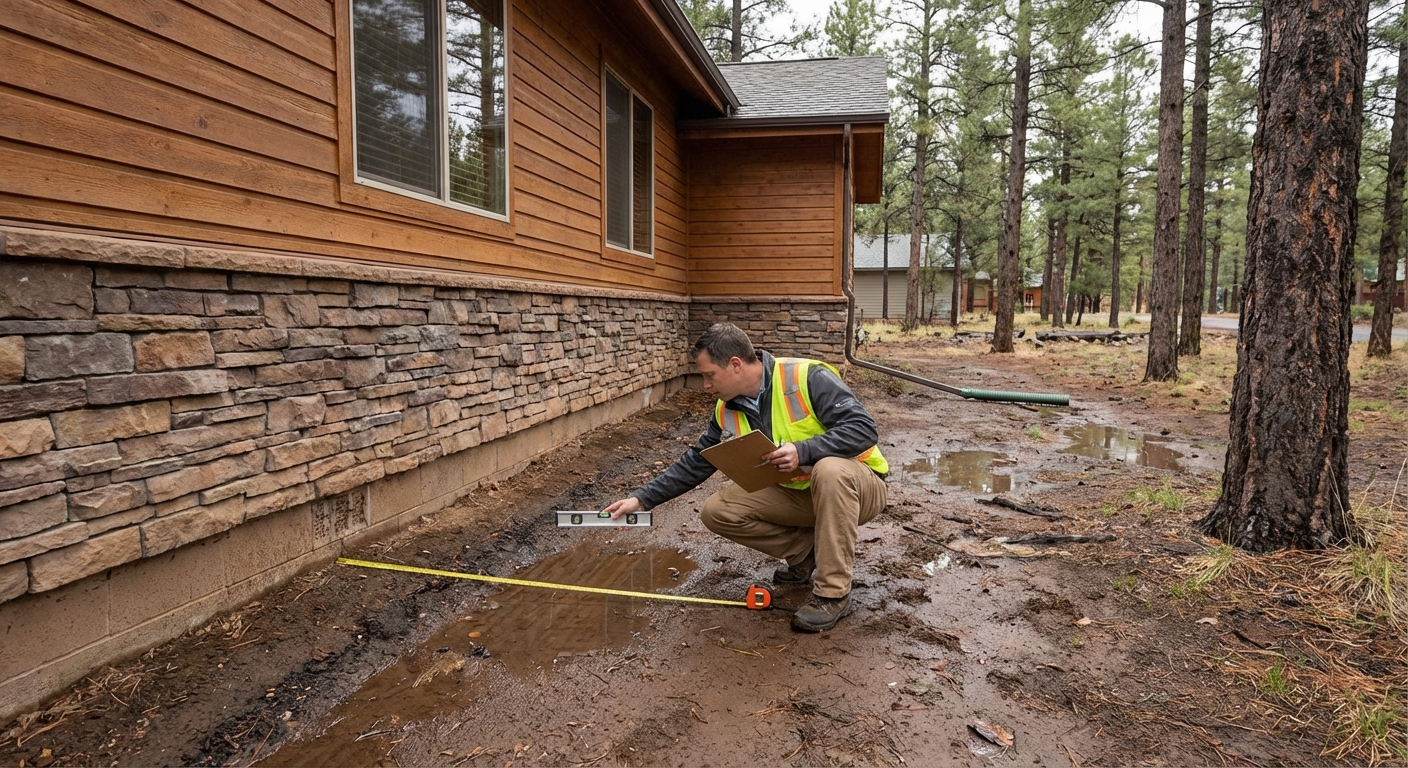
So here's what matters. A competent home inspection in Flagstaff should absolutely flag drainage and grading problems — if the inspector knows what to look for and the conditions allow it. But not every inspection catches everything. Weather, timing, and the inspector's experience all play a role. We'll walk through what gets checked, what gets missed, and how to make sure water issues don't become your problem after closing.
Flagstaff's Climate Doesn't Mess Around
Flagstaff sits at elevation with weather that swings hard. Summer monsoons dump water fast. Winter snow piles up, then melts. Both scenarios create runoff that needs somewhere to go — and if that somewhere is your foundation, you've got a problem brewing.
Proper grading pushes water away from the house. Drainage systems like gutters, downspouts, and subsurface drains handle the rest. When either one fails, water pools where it shouldn't. That leads to foundation shifts, basement seepage, mold growth, and wood rot. All of it avoidable if the property was set up right from the start.
What Gets Checked During the Inspection
A solid inspector will evaluate both the exterior grade and the drainage infrastructure. They're looking for red flags that suggest water isn't being managed correctly. Some of these signs are obvious. Others require a trained eye and familiarity with how Flagstaff properties behave under stress.
Here's what should be on the checklist:
- Slope direction around the foundation — it should drop at least six inches over ten feet
- Gutter condition and whether downspouts discharge far enough from the house
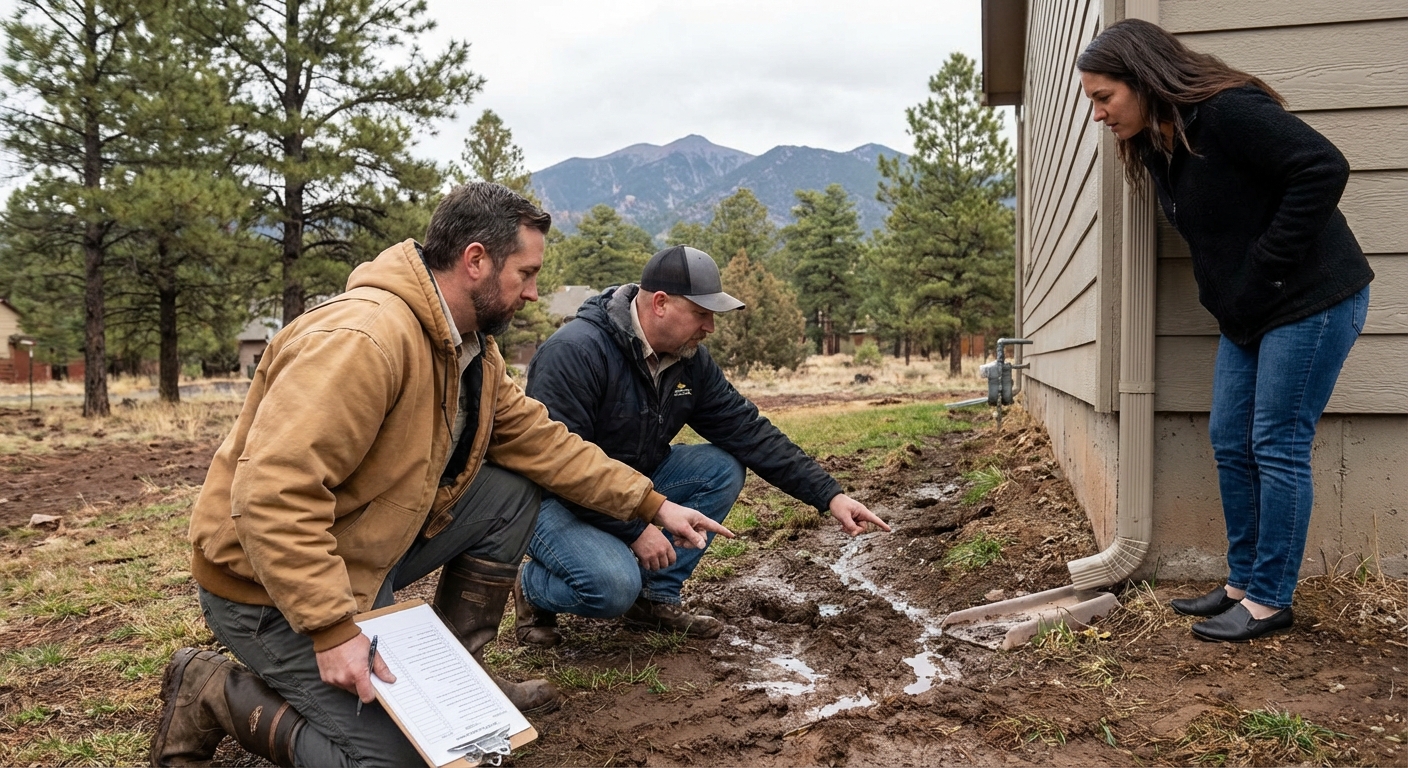
- Visible erosion, soil settlement, or standing water near the foundation
- Moisture or staining in basements, crawl spaces, or along interior walls
- Retaining walls, French drains, or swales that may be installed but not functioning
Where Standard Inspections Hit a Wall
Inspectors work with what they can see. They're not excavating your yard or running water tests to simulate a monsoon. If the inspection happens during a dry stretch, drainage issues might not show up at all. No pooling, no stains, no obvious erosion — just a clean-looking yard that could turn into a swamp the next time it rains.
Underground drainage systems are another blind spot. Unless there's visible failure or the inspector has access to system documentation, they're not going to know if your French drain is clogged or if a pipe collapsed under the driveway. That's not negligence — it's just the reality of a non-invasive inspection. If you suspect deeper issues, you'll need a specialist with cameras or excavation tools.
When the Inspector Flags a Problem
Finding drainage or grading issues during inspection isn't the end of the deal. It's leverage. Most of these problems have fixes — regrading soil, extending downspouts, adding surface drains, or installing a sump pump. The question is who pays for it.
Use the inspection report to negotiate. Ask the seller to handle repairs before closing, or request a credit to cover the work yourself. If the issue is significant — say, foundation cracks tied to long-term water intrusion — bring in a structural engineer or drainage contractor for a second opinion. That report gives you hard numbers and a clear scope of work, which makes negotiations a lot less fuzzy.
What Buyers Should Demand from Their Inspector
Not all inspectors are created equal, especially when it comes to site drainage. You want someone who understands Flagstaff's soil, weather patterns, and common construction practices. Ask about their experience with grading issues. Request that they spend extra time on the exterior and document everything with photos.
Here's what separates a thorough inspection from a surface-level one:
- Detailed notes on slope measurements and drainage flow direction
- Photos of problem areas with context — not just close-ups
- Comments on whether gutters and downspouts are sized appropriately for the roof area
- Assessment of landscaping features that could affect water movement
- Recommendations for follow-up evaluation if conditions limit visibility
Red Flags That Demand a Closer Look
Some findings should trigger immediate follow-up. If your inspector notes any of these, don't brush them off as minor cosmetic issues. They're symptoms of bigger problems that could cost you serious money down the road.
- Cracks in the foundation, especially horizontal or stair-step patterns
- Water stains or efflorescence on basement walls
- Soft or spongy soil near the foundation
- Gutters that overflow or discharge directly against the house
- Mold or mildew in crawl spaces or lower-level rooms
Why Timing and Weather Matter
Inspections scheduled during dry conditions won't reveal how the property handles water. If you're buying in late spring or early fall, you might not see what happens during monsoon season or snowmelt. That's a gamble.
If possible, schedule the inspection after a rain event or ask the inspector to return during wetter conditions. Some buyers even request a follow-up visit during peak runoff season as a contingency. It's extra effort, but it's also the difference between catching a problem early and discovering it when your basement floods.
When to Bring in a Specialist
If the inspection raises concerns but doesn't provide definitive answers, hire a drainage consultant or geotechnical engineer. They'll conduct soil tests, evaluate subsurface drainage, and give you a detailed report on what's failing and what it'll take to fix it.
This is especially important if:
- The property sits on a slope or near a natural drainage path
- There's a history of foundation repairs or water intrusion
- The home has a finished basement or crawl space with no visible access to drainage systems
- The inspector noted issues but couldn't determine the cause
Documentation Protects You After Closing
Once you own the property, the inspection report becomes your baseline. If drainage problems surface later, you'll want proof of what was disclosed and what wasn't. Keep copies of the inspection, any specialist reports, and all correspondence with the seller about repairs or credits.
If the seller made promises to fix grading or drainage issues, get it in writing and verify the work was completed before closing. Don't rely on verbal agreements or assume the problem was handled. We've seen too many buyers move in only to find the "fixed" drainage system was just a bag of topsoil dumped near the foundation.
Protecting Your Investment from Day One
Drainage and grading aren't glamorous. They don't show up in listing photos or get mentioned during open houses. But they're foundational — literally. A home inspection in Flagstaff can absolutely catch these issues, but only if you hire the right inspector, ask the right questions, and follow up when red flags appear. Water damage doesn't announce itself until it's already expensive. Just as humidity and salt air damage tile in coastal environments, water intrusion creates long-term structural problems that compound over time. The inspection is your chance to get ahead of it. Similar to how grout keeps getting dirty without proper sealing, drainage issues worsen without intervention. Whether you need tile grout cleaning for interior surfaces or exterior drainage solutions, addressing water management early prevents costly repairs. For properties with outdoor hardscaping, maintaining pool decks patios driveways requires proper drainage planning. Professional natural stone cleaning services understand how water affects different materials. If you're dealing with water-related surface damage, contact specialists who can assess and remediate the problem before it escalates.
Let's Safeguard Your Flagstaff Home Together
We know how crucial it is to catch drainage and grading issues before they turn into costly headaches. Our team is ready to help you protect your investment with a thorough inspection and practical solutions tailored to Flagstaff’s unique climate. If you want peace of mind about your property’s water management, give us a call at 928-600-7761 or Schedule An Inspection and let’s make sure your home stays dry and secure for years to come.
‹ Back
Recent Posts
-
How Long Does a Full Home Inspection in Flagstaff Take?
February 2, 2026
-
Is a Termite Inspection Included in a Flagstaff Home Inspection?
January 19, 2026
-

Why Should I get My Tile & Grout Professionally Cleaned?
January 15, 2026
-
-
Do New Construction Homes in Flagstaff Still Need Inspections?
December 22, 2025